Posts

Showing posts with the label adulthood

Rebuilding self-esteem after abuse

Sexual abuse or any form of psychological abuse can have lasting effects on a survivor, and in particular will have a detrimental impact on one’s self worth. The main issue is that the value of a survivor of abuse will have been falsely defined by others, which can cause huge problems with identity. As a result of abuse, a survivor will be conditioned to accept that they don’t deserve as much as others and they won’t know how to build a healthy self-esteem. It is common for survivors of abuse to internalise negative thoughts about themselves since abuse damages one’s self worth.  Something important for a survivor to remember is: your abuser’s mistreatment of you does not dictate your value. Surviving abuse and rebuilding self-esteem is not an easy journey but it is possible. Here are some steps that can help someone on their journey. Have a support network It can really help to reach out to friends and family, and talking openly about your issues and healing process ...
Birthday revelation

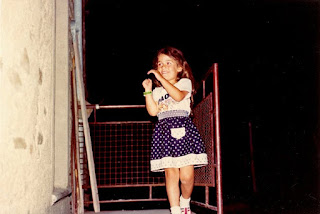
On the morning of my recent birthday this year, I quietly contemplated my life and previous celebrations. A tear rolled down my cheek as I started to remember my younger self trying to look happy, but on the inside she was in pain and felt very confused. It was such a powerful memory because as I delved deep inside my soul, I was able to tap into a buried emotion that I didn’t know still existed. Upon reflection, I realise that I felt overwhelmed by people’s kindness and attention on that annual day; behaviour that can easily confuse a child who is being abused. And the end of the day would culminate in an anti-climax that would often lead me to feel very low and tearful. That poor little girl was crying out for help internally but no one could hear her. Over the years I haven’t always enjoyed or wanted to celebrate my birthday and I now understand why. The low self-worth that was ingrained from a young age remained with me for a long time, and as a result, I didn’t feel worthy of ...

Speaking out

I recently saw a thought provoking question on Twitter and felt the urge to answer. It said: “If you are a survivor of abuse, what might have helped you to tell someone sooner?” It is certainly a difficult question to answer because I can’t imagine how things might have been different for me. I was a very open, talkative child but still I stayed silent. Survivors of abuse carry a lot of shame and will therefore keep the secret to themselves for a long time, usually for as long as about 20 years. However, as a society it is within our power to change this pattern and ensure that children are protected and able to speak openly. Firstly, I believe it is the responsibility of adults, such as parents, teachers and doctors, to be aware of behaviour in children and how it differs in those who are being abused. The next step would be to arrange a therapeutic intervention with a child that might enable disclosure; this could be made easier for children if they are educated on the topic of a...

Counselling survivors of abuse

Over the years I have had therapy with a number of counsellors and my experiences have varied. I feel that I am now at a point where I am able to reflect on what worked well for me and what didn’t. In this post I’d like to include some ideas for counsellors who are considering working with survivors of abuse and trauma. First session Consider the fact that the client may have never spoken about the abuse until the first session. Therefore, be mindful of how much information you ask of the client as you don’t want to re-traumatize. The client may have trust issues so a therapist needs to work towards building a good rapport and a trusting relationship. I would certainly advise against asking too many questions, which may feel like an interrogation to the client, and it might make the client feel judged and anxious. Comfort Tell your client that they can have comfort breaks if they wish. Anxiety can lead to an increased need to go to the toilet, and unfortunately if a cou...

The key to my past

Image
Child sexual abuse (CSA) has lifelong effects that are often not recognised or understood. Sexual abuse usually takes place in secret and is therefore kept secret. Due to the silence surrounding CSA, children are forced to endure the abuse and its effects alone. As a result, adult survivors often continue to feel alone and isolated. It is quite common for survivors to not remember the details but only have a vague recollection that something wrong has happened. As a child I learnt many coping mechanisms, one of which was to pretend nothing was wrong. My story had been written but I decided to rip it to shreds, lock it up in a cupboard and throw away the key. That locked cupboard remained untouched for many years until one tragic day; the day I found the key to my inner pain and depression. During the ensuing period I can only describe what I experienced as shock and inner turmoil. My whole life had been turned upside down in a split second and I felt alone and helpless. It would be...

The freeze response

As a survivor of sexual abuse a term I’m familiar with, and have often experienced, is the fight or flight response. I believe it is our way of surviving instinctively when faced with traumatic situations. In my reflections over the past couple of months, I’ve noticed that in certain situations I feel unable to fight or walk away, instead I simply freeze. Intrigued by this revelation and interested in finding out more, I did some research and was relieved to find that the fight or flight response is now referred to as the fight, flight or freeze response. I’m sure we have all seen footage of predatory attacks where an animal suddenly “plays dead” in order to potentially survive. It’s interesting how humans adapt the same technique in dangerous situations. I recently saw a film of a polar bear being chased, he suddenly froze and his body started shaking. Seeing this image of the polar bear shaking made me cast my mind back to a traumatic event in my life. I remember the way my body sh...

Secondary wounding

I’ve previously written about the effects of child abuse and the years it can take to heal from traumatic experiences. It takes a lot of courage for a survivor to disclose abuse and seek help. In fact, I was recently surprised to read that the average duration between the start of abuse and accessing support is 20 years. When I worked out the maths in my head I realised that in my case it was 21 years.    Unfortunately for many abuse survivors who choose to disclose their past with family or friends, they may be disbelieved, blamed or experience ignorant responses. These reactions to a survivors’ accounts or feelings are often more damaging than the initial abuse and can result in a survivor feeling worse. This is also referred to as secondary wounding    Upon reflection I realise that I have been repeatedly traumatised throughout my life as a result of peoples’ insensitivity and lack of understanding about abuse. As a result of my disclosure, I experienced a...